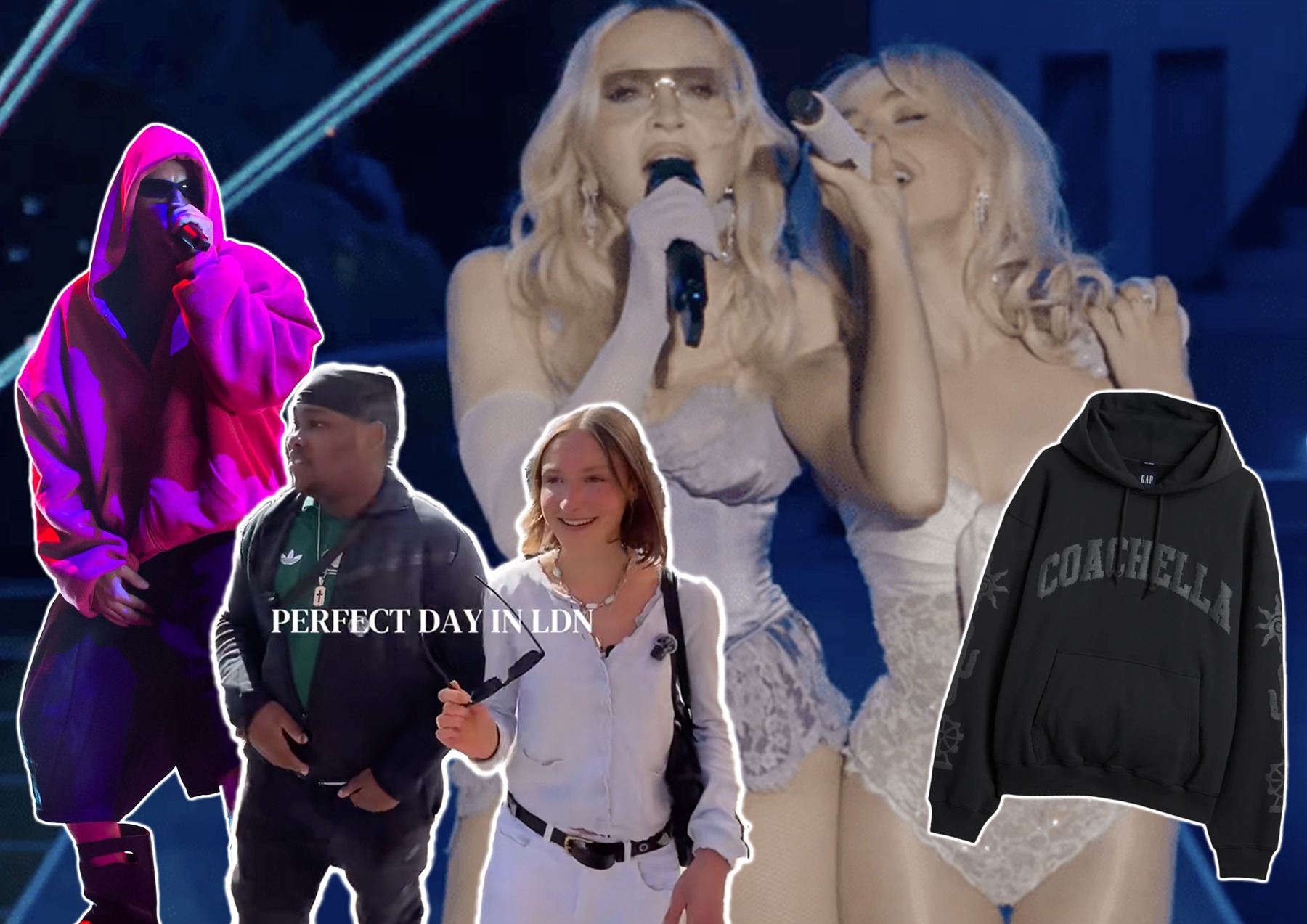
What was your standout moment from Coachella? Was it Justin Bieber going down memory lane via YouTube (Katy Perry – “Thank God he has Premium, I don’t want to see ads”), and making everyone love him again… or not? Maybe it was KATSEYE performing “Golden” alongside KPop Demon Hunters, or punk godfather Iggy Pop or Psycho Killer, David Byrne, reminding us what true icons look like.
If you’re a music fan – or just chronically online – was there a moment you wished you were out there in the desert in a bikini top, hot pants, a crochet skull cap and cowboy boots, watching Madonna and Sabrina Carpenter? Or did it all feel a little too perfect, too curated and more about the aesthetic than the music?
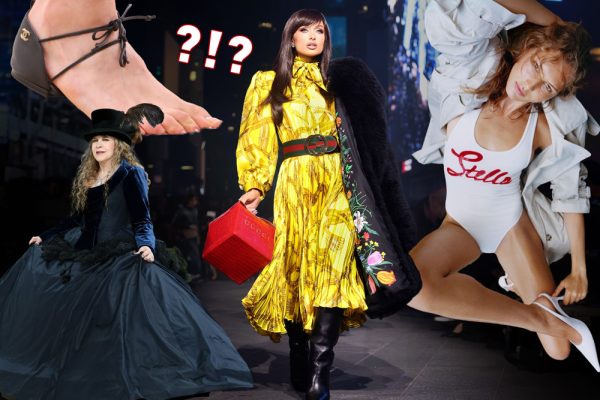
Fashion is a massive part of Coachella, and this year artists leaned into luxury designers more than ever. Sabrina Carpenter wore four bespoke looks by Dior. Sombr took to the stage in Valentino – he’s a brand ambassador, while Central Cee sported a custom Gap zip-up hoodie reading “CAP” instead of “GAP.” No coincidence that this year’s festival also featured a Gap pop-up centred on its logo hoodie.
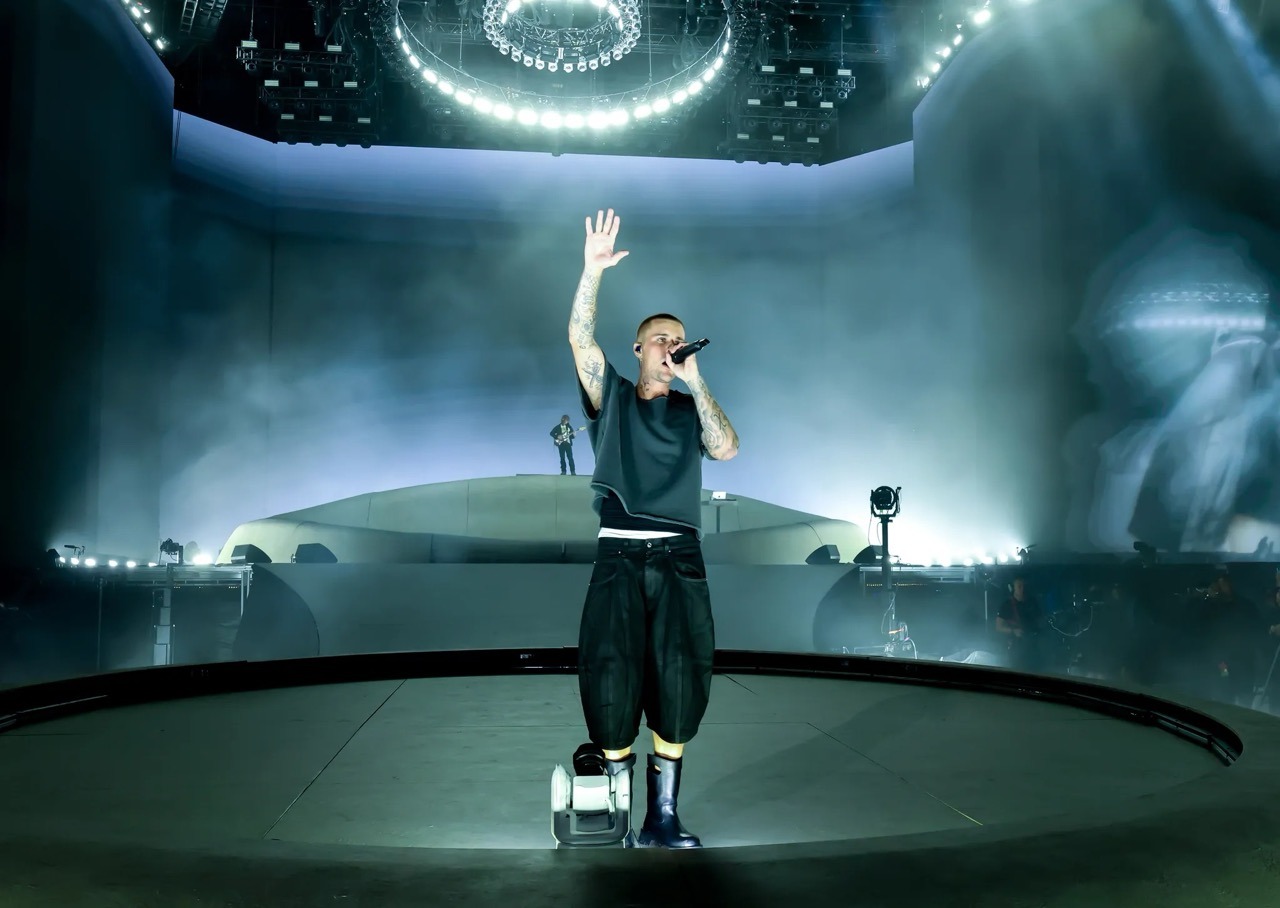
Justin Bieber’s chunky boots by Loewe, paired with a pink hoodie and grey T-shirt from his own label, SKYLRK, felt more low-key. They weren’t for sale on his website, but merch tied to his performance was – and shared by Kylie Jenner and Hailey Bieber in the lead-up to his performance.
Luxury labels on stage combined with the endless stream of “influencer looks” across platforms, underline the reality that we’re constantly being encouraged to buy. Do we even know the difference anymore between an organic moment and one orchestrated for consumption – all in the name of an “experience” or an “aesthetic”?
Surely by now we are all aware of the agendas behind most big influencers. They’re not just sharing their lives, they’re selling a carefully curated, aspirational version of a lifestyle. Their feeds have become personal brands, driven by selling products, making money and staying visible in the algorithm.
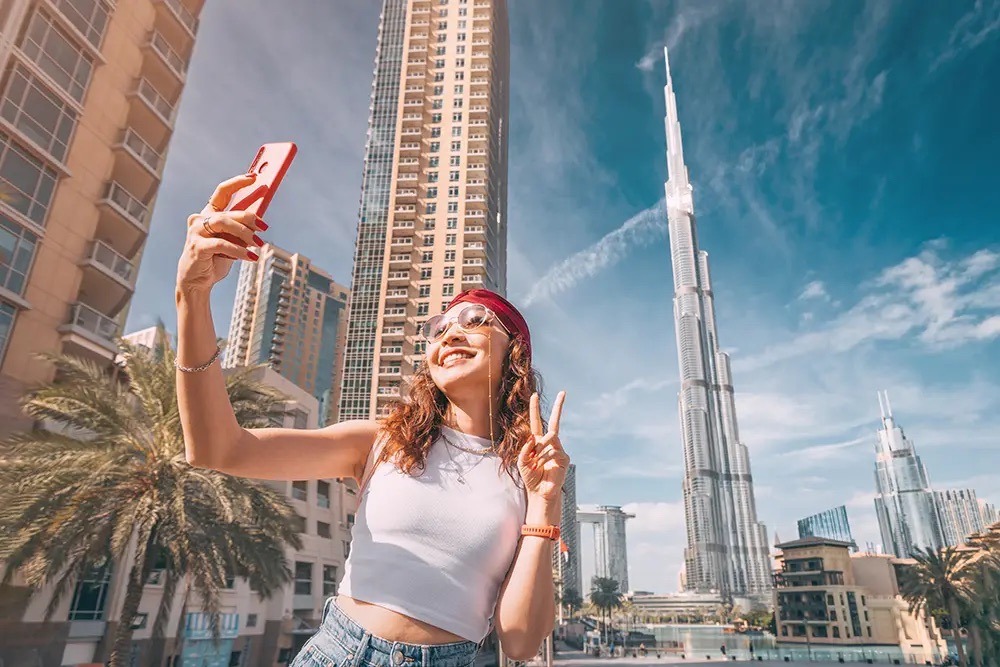
Nowhere is this more apparent than in Dubai. The city has actively positioned itself as a global hub for content creators, offering initiatives like Creators HQ, long-term “golden visas,” tax perks, funding, and purpose-built spaces to film and network. It’s an attempt to turn influencing into a fully-fledged industry and the city into the luxury capital of the content economy.
For a while, it worked. The formula was simple – luxury apartments, aspirational wellness, supercars, beach clubs, rooftop pools – peak lifestyle content. But when global tensions escalated and Donald Trump set the world on fire, that image began to crack. Missile alerts and drone warnings in the early hours made the seven-star lifestyle feel less secure. Dubai had always promised safety and stability and suddenly that narrative felt less certain.
Stories circulated of tourists being arrested for posting footage of attacks, while influencers’ feeds filled with almost identical reassurances: “everything is calm”, “we feel totally safe”, “the government has everything under control”. Meanwhile, Western media reports of ongoing strikes and suspended flights highlighted the widening gap between lived reality and the version presented online.
The influencer economy is predicted to surpass $34 billion by 2026, but the power is shifting. There’s a move away from generic luxury influencers and ad-heavy feeds toward creator-led brands, niche communities and more authentic storytelling. And ironically, that shift is reflected in the increasingly uniform “influencer” fashion coming out of the Coachella desert.
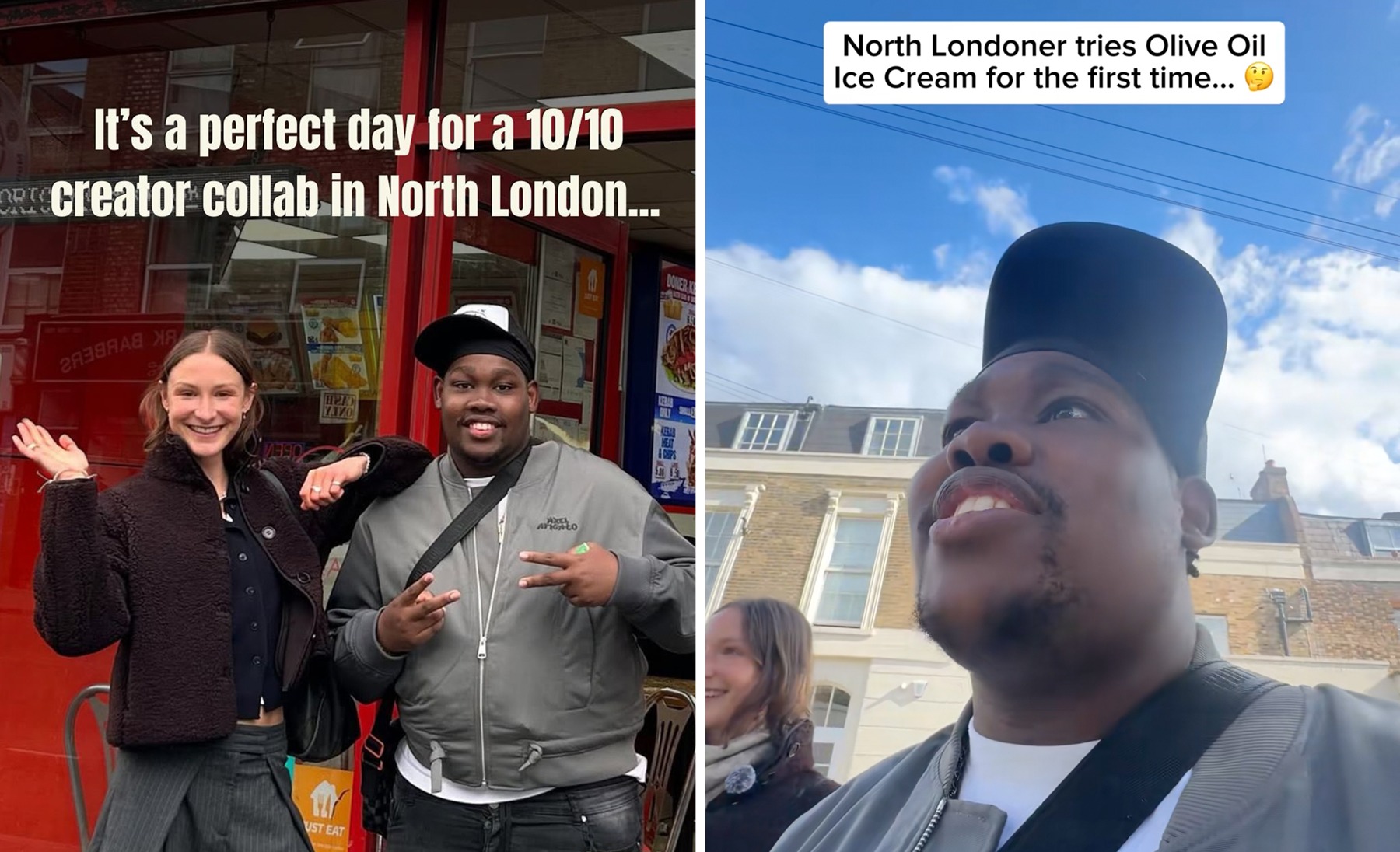
One of the most refreshing things I’ve seen recently on TikTok is the collaboration between North Londoner Kobi Coker and Florrie Tyler, who went viral for her “perfect day” guides for girls in North London. Coker – self-appointed as the “Endz government department for Research” – put those recommendations to the test, visiting the expensive hipster cafés and restaurants she highlights. He wasn’t always impressed, calling out both the prices and the disconnect from everyday reality.
When the two teamed up to create a joint “perfect day,” audiences loved the contrast. The collaboration struck a nerve and went viral.
So yes, there’s still refreshing content out there – and increasingly, it’s real people (not polished perfection) that truly inspires us. I’ll take a “dish up dinner with me” or a “day-in-the-life in a favela” over a “get ready with me – here’s a link to a glowing skin cream that doesn’t actually work” any day.
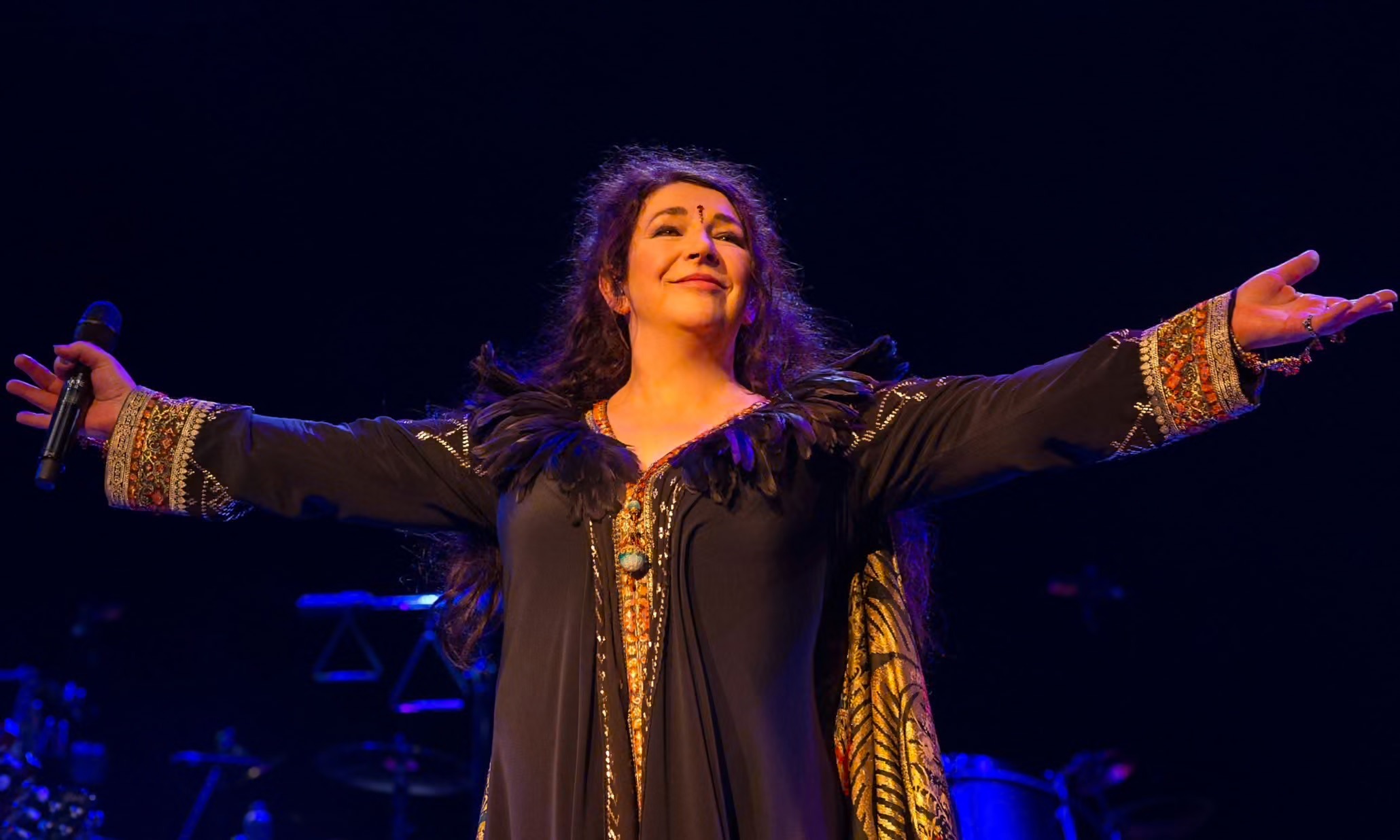
Kate Bush, Hammersmith Apollo, 2014
And back to music and real experiences. Two of the most iconic moments in my life were completely phone-free. Seeing Kate Bush at the Hammersmith Apollo, where she asked fans to refrain from using phones so everyone could simply experience the music – that was pure emotion. I cried. Having loved her since I was 18, it felt incredible to hear her live, fully present.
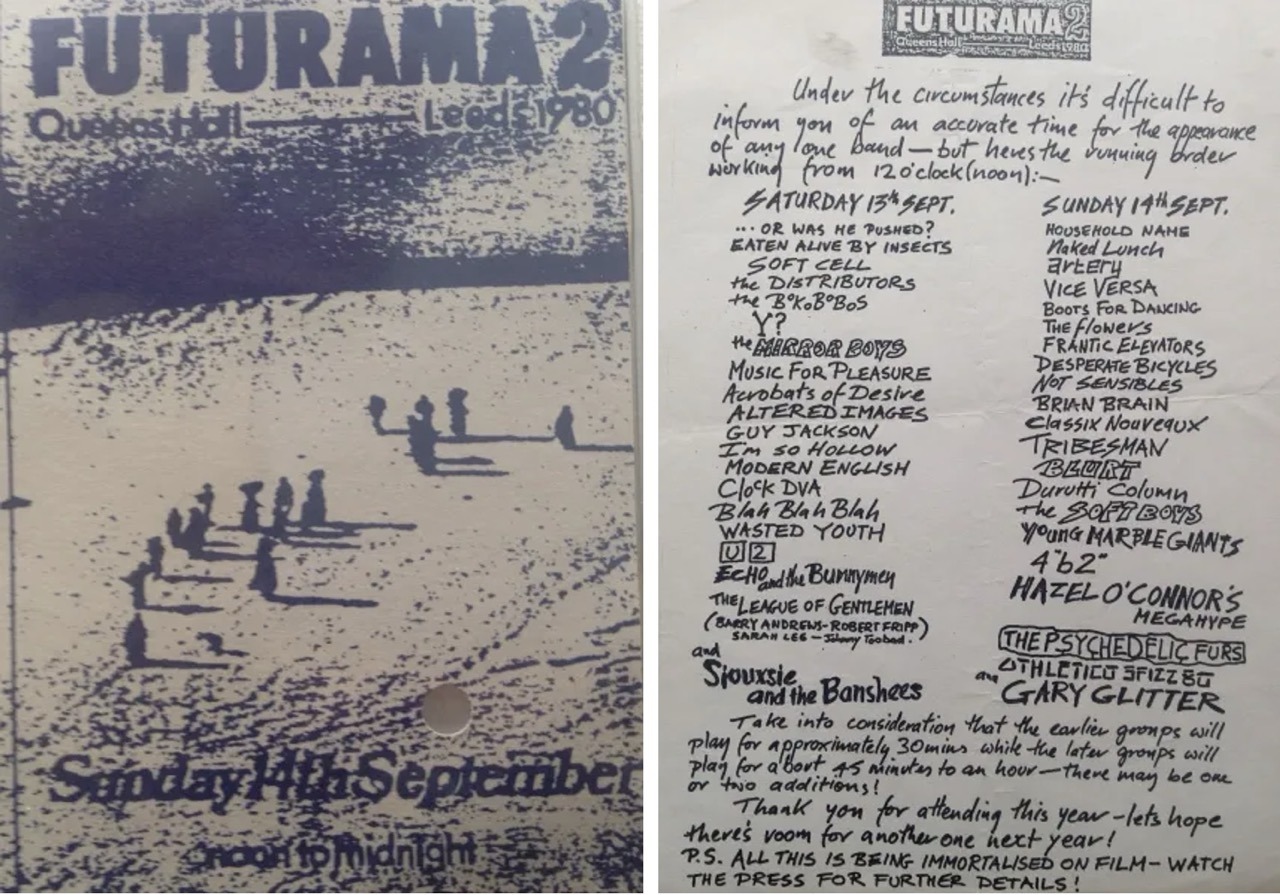
Futurama , Leeds 1980
And going even further back – to Leeds, Queens Hall Leeds, 1980 – yes Im old. We slept in a car. It was grimy, raw, chaotic and completely formative. There are no photos, barely anything online except a random YouTube clip of The Not Sensibles performing “Death to Disco.” The spirit of punk was alive that weekend and Siouxsie Sioux was my style icon.
So less phones, more real life and no more cowboy boots please. Music should be real, raw and visceral and while fashion has and always will be a massive part of the surrounding culture, let’s make more about individual style and less about commerce.